
Diversity
Equine art is only one strand of a wide-ranging portfolio for artist Terence Gilbert who has put together a lifetime of work
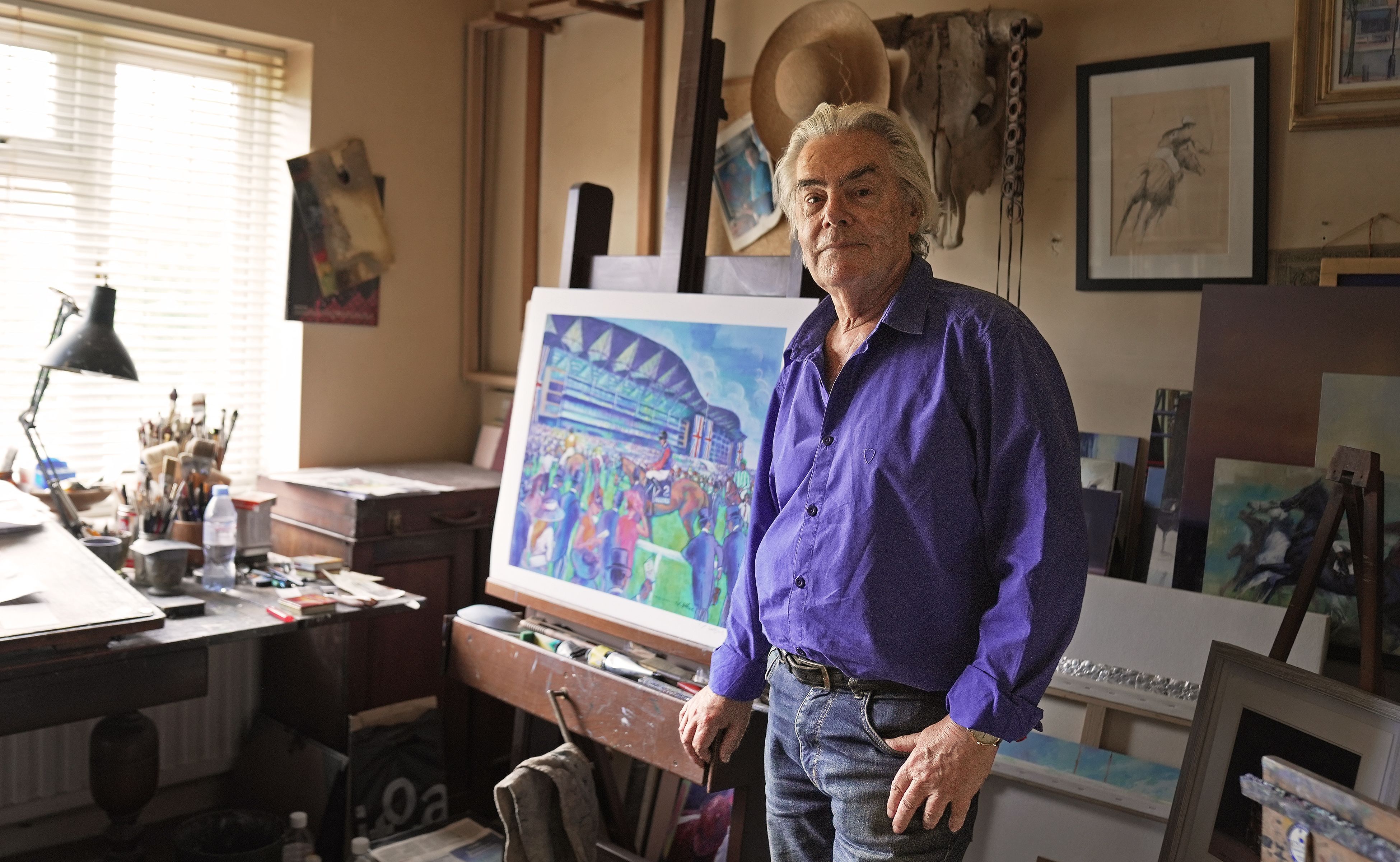

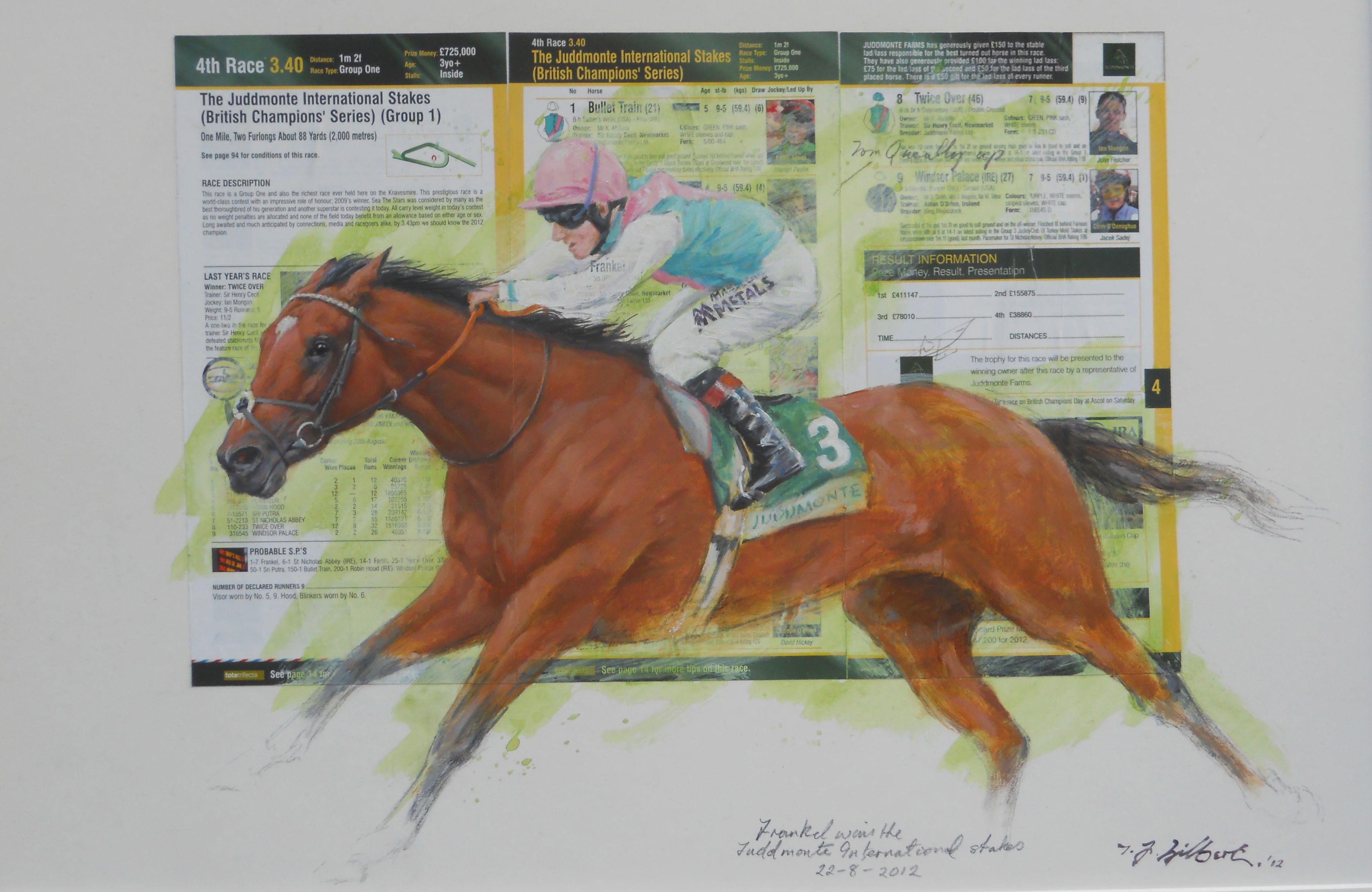
FOR NEARLY 40 years artist Terence Gilbert has been best known in racing circles for his race card montages of famous (and favourite) horses, sold as individual private commissions or popular prints.
However, Gilbert, 78, is far from a one-trick pony and has been producing artwork on a diverse range of subjects and in a range mediums since he was a teenager.
His parents were initially shoemakers in London, and the family lived in a flat near Westminster Bridge and Waterloo Station. His mother worked for several leading ballet shoemakers, Gamba’s and Freed’s with customers including Dame Margot Fonteyn. His father left the industry due to ill health going on to become a civil servant working at the National Gallery
He was an avid punter on his days off work, and the young Gilbert was taken by train to all the London tracks, experiences which would go on to form the basis of Gilbert’s subjects and which continue to this day.
Recalling one of the more exciting aspects of his formative years Gilbert says, “The area of London in which I grew up had all these illegal bookmakers on the street corners.
“There would be about four of them, but they’d all spread if the police turned up – one would often be up the stairs into our house, which was one of their hideouts!”
Though he enjoyed going racing, Gilbert’s aptitude for art was also present from the start.
He says with a smile, “I was always a favourite of the art teachers at my schools, and with Dad working at the National Gallery, I spent a lot of time there as a boy.”
Even as a young man, he had a fine appreciation of the best artists, which influenced his early work.
“I always admired Turner, Canaletto was a great favourite back then, too – The Stonemason’s Yard I remember as a particularly fine piece.
“As time went on, I started copying them, I’d have been about 13, and I had my easel there at the Gallery, as other artists do, ambitiously starting with big pieces, such as those by Claude Lorrain.
“My teachers got me into Camberwell Art School at a very young age, I was only 15, but everybody else was at least two years older than me, it was terrible!
“Most of the time we were drawing objects on the floor, as still life, with the idea to get the negative spaces in between the objects and then moving on to figures. It was very limited though, not full time.”
Sadly, tragedy hit the Gilbert family and he lost his father when he was just 16, it meant young Gilbert had to head out and earn a living.
“I began in advertising as a junior and, as I knew London like the back of my hand, I was the delivery boy, delivering to ad agencies and to print works, which gave me a knowledge of how these businesses operated from the ground up.
“I then started in the agency studio itself, drawing keylines for brochures, there were no computers then, of course. The page layouts were all done by pasting photographs and getting things down on boards and in shape.
“Luckily, I was sat next to some of the great illustrators of the time – Renato Fratini, Gino D’Achille, Pino Dell’Orco. The Italians were here in London and, luckily, I was in the thick of it – Fratini did the James Bond poster for From Russia With Love.
“I progressed to doing some illustrations of my own working for David Judd Associates Limited, which was the top studio of the time and the one that all the big agencies were using, such as J Walter Thompson and Rubicon.
“They used David Judd as it was the crème de la crème with all the best artists – as advertising agencies didn’t have any creative staff to do the illustrations, or lettering for instance.”
It was time well spent for the young man who learned the techniques of commercial illustration.




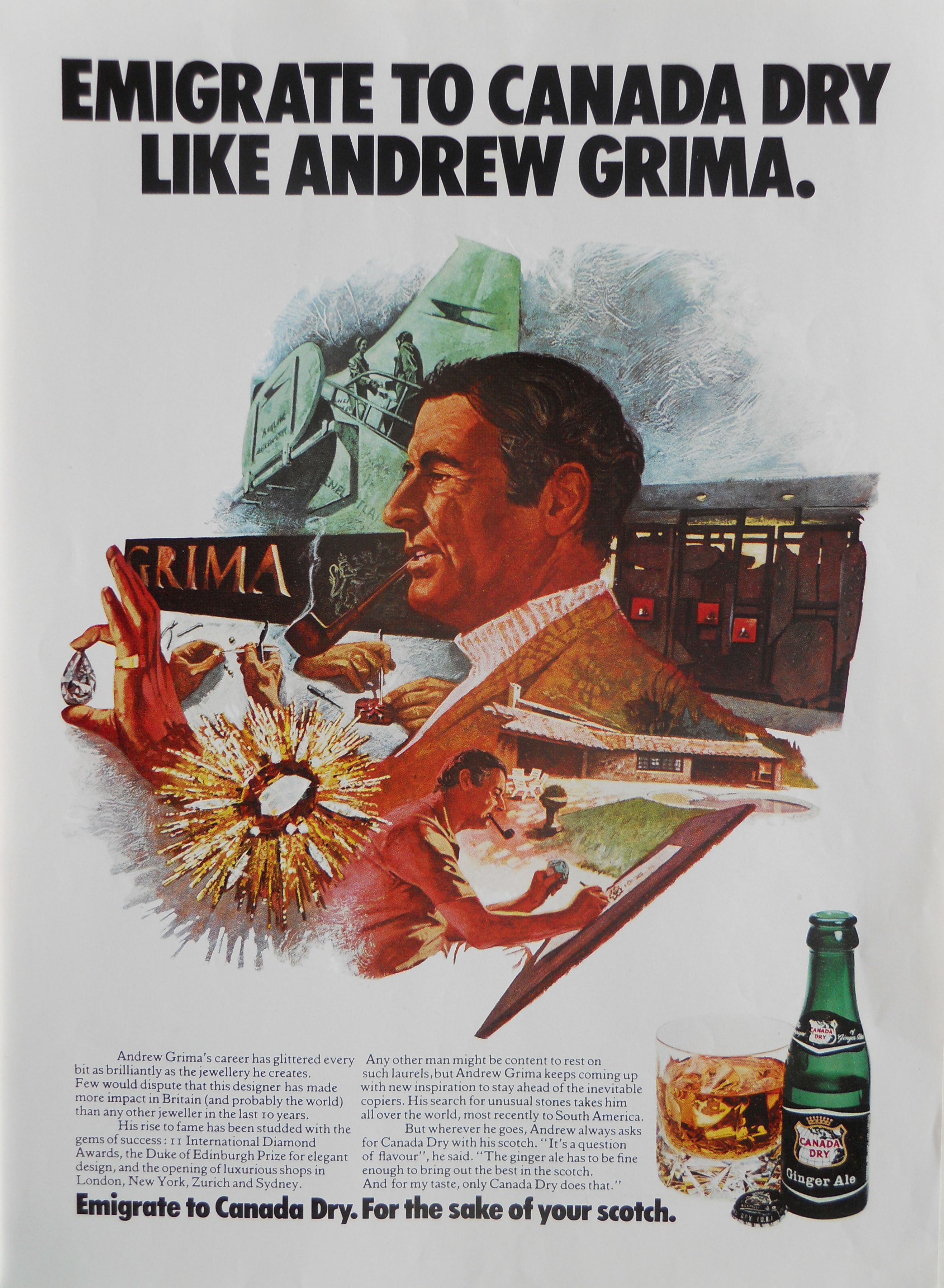

In 1966, at just 19, he decided to branch out alone.
“I had a few contacts, and I started doing illustrations for magazines. All the magazines then, such as Women’s Own, they all used illustrations so there was plenty of work, Canada Dry was another client, and from there I slowly moved things along.”
He moved out of London to Maidenhead in 1969, which, for the born and bred Londoner was something of a shock to the system at first and he remembers that it was “too quiet for me, but London was too noisy for my wife!”
He made a studio from an upstairs bedroom, and has worked from the room on an almost daily basis ever since.
In those early days, book cover illustrations were the bill payers, the rise of popular pulp fiction offering plenty of work and his commissions would come by consignments.
“One day it was 18th century romantic novels by Georgette Heyer, the next it would be World War II, such as Cornelius Ryan’s The Longest Day,” he recalls.
An American company suggested he try westerns, which led to a steady income stream, both for the book covers and selling the original artwork through the Stremmel Gallery in the US, and Gilbert subsequently developed a strong following stateside, too.
His subject matter took a different turn in the mid-70s.
“My wife [a court room journalist] saw an article about the arms dealer Adnan Khashoggi, and it mentioned a collection of art that he’d bought
from the Mathaf Gallery in London. I contacted them just at the right time, as they were looking for an artist to go to out to the Middle East.
“They chose me and I went out to there to paint, I was with them for about five years.
“Back then it had been a taboo thing so no one had painted these countries, all the earlier Orientalist painters had gone to Egypt or Turkey, so it meant that I was one of the first to paint in the region.
“I would put together at least four or five paintings for Oman each year,
as well as portraits of Sheikh Zayed and other Emirati rulers, and some of old Dubai before it was developed for Sheikh Mohammed Al Maktoum.
“The western works were also going well then and I’d also started to do some racing, the montages on the racecards.
“The Middle East market slowly waned, of course, it’s full of artists out there now. Luckily I have other strings to my bow, such as the racehorse.”
He reflects, “Now I can just jog along, I’m not fighting to find the next commission, though one always needs money, I can do whatever comes up.”
As his work became known on the racing circuit, he began to pick up some fine commissions.
“I got to know some trainers, mostly in Ireland. I knew Peter O’Sullevan very well and he introduced me to John Magnier.
“I went over to Coolmore to paint his horses, including Galileo, and I did about four big paintings of the Queen’s visit in 2011. I also painted Yeats, and later I did another of Galileo racing.
“Most of the work I do in Ireland now is for JP McManus, the last one for him was I Am Maximus.”
Another notable equine commission in the traditional style was of the late Queen riding with Ronald Reagan in Windsor Great Park, which was presented to the President in the White House.
One of his biggest sales to date was the £27,000 paid for a portrait of Lester Piggott with his all Derby-winning silks behind him, an auction piece for the Sir Peter O’Sullevan Charitable Trust.
It’s a charity close to Gilbert’s heart and he already has another piece underway on the easel ahead of this year’s event.
Gilbert’s work spans an incredible variety of mediums, techniques and subject matter, and he credits his early commercial artist beginnings for his diversity.
“I was always very good at figures in action – whether it was a gunslinger,
or a German officer firing a machine gun. To me the figure is the main thing, dressing just goes on the top, it just developed.
“If you can draw and paint in illustration, you’ll get assignments in everything; you can either do it or you can’t,” he explains, adding: “It was the variety of subjects in illustration that led me to paint everything.”
Of his choice of medium, again he has never been opposed to new ideas.
“I’ve always worked in all mediums, pastels, pen and ink, acrylics, oils, anything. With illustrations everything always had to be done tomorrow, which meant that I used gouache a lot for pictures. I make them look like oils, but by using gouache it dries very quickly.
“These days, primarily I use acrylic first and then oils on top, so I don’t have to wait too long for the under-painting to dry.
“I’m doing a lot more canvas painting now, but illustrations were always on board. I loved Edward Seago’s work, he always painted on hardboard, gessoed on the top, so that’s my preferred medium as I like to use a painting knife.
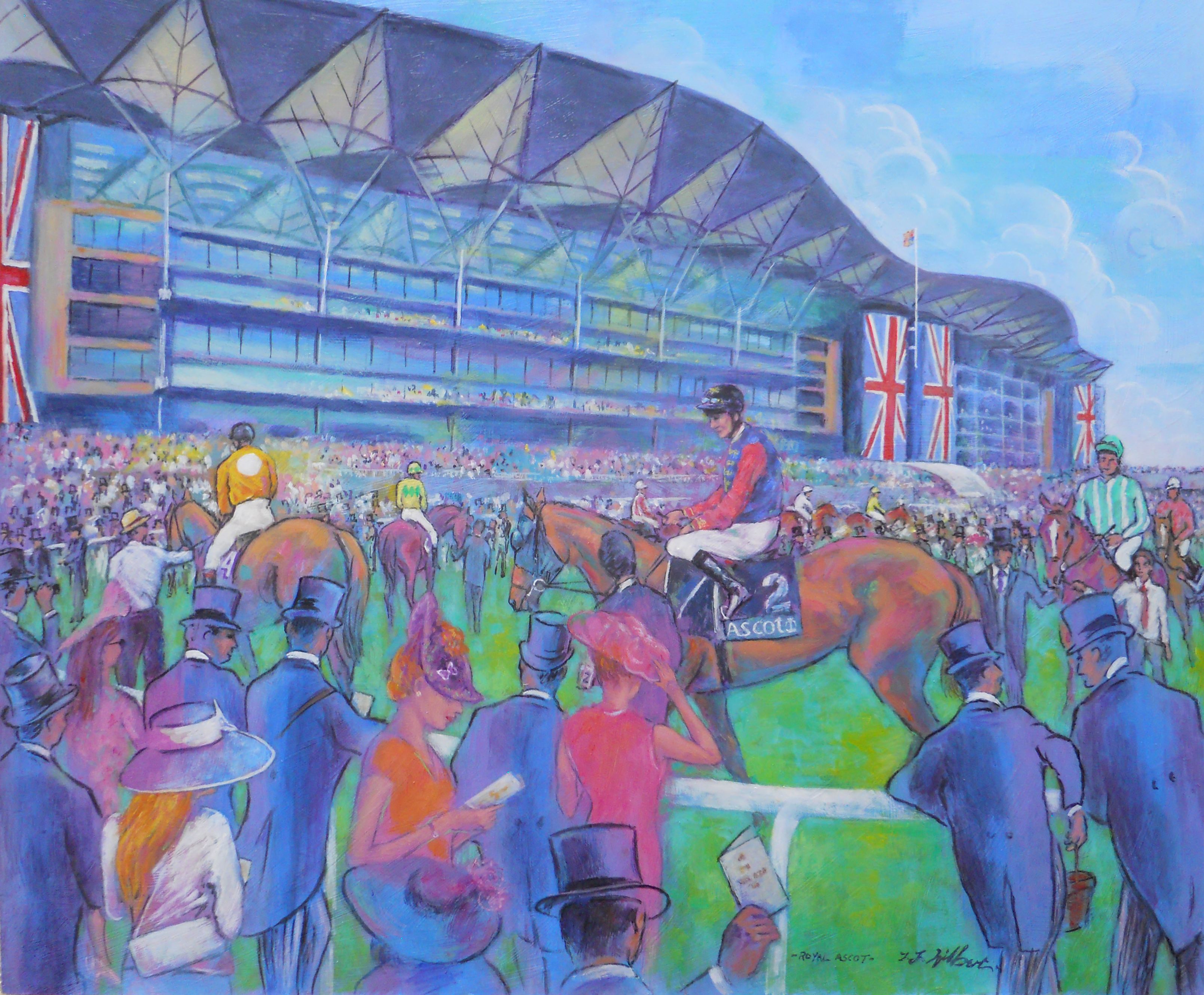
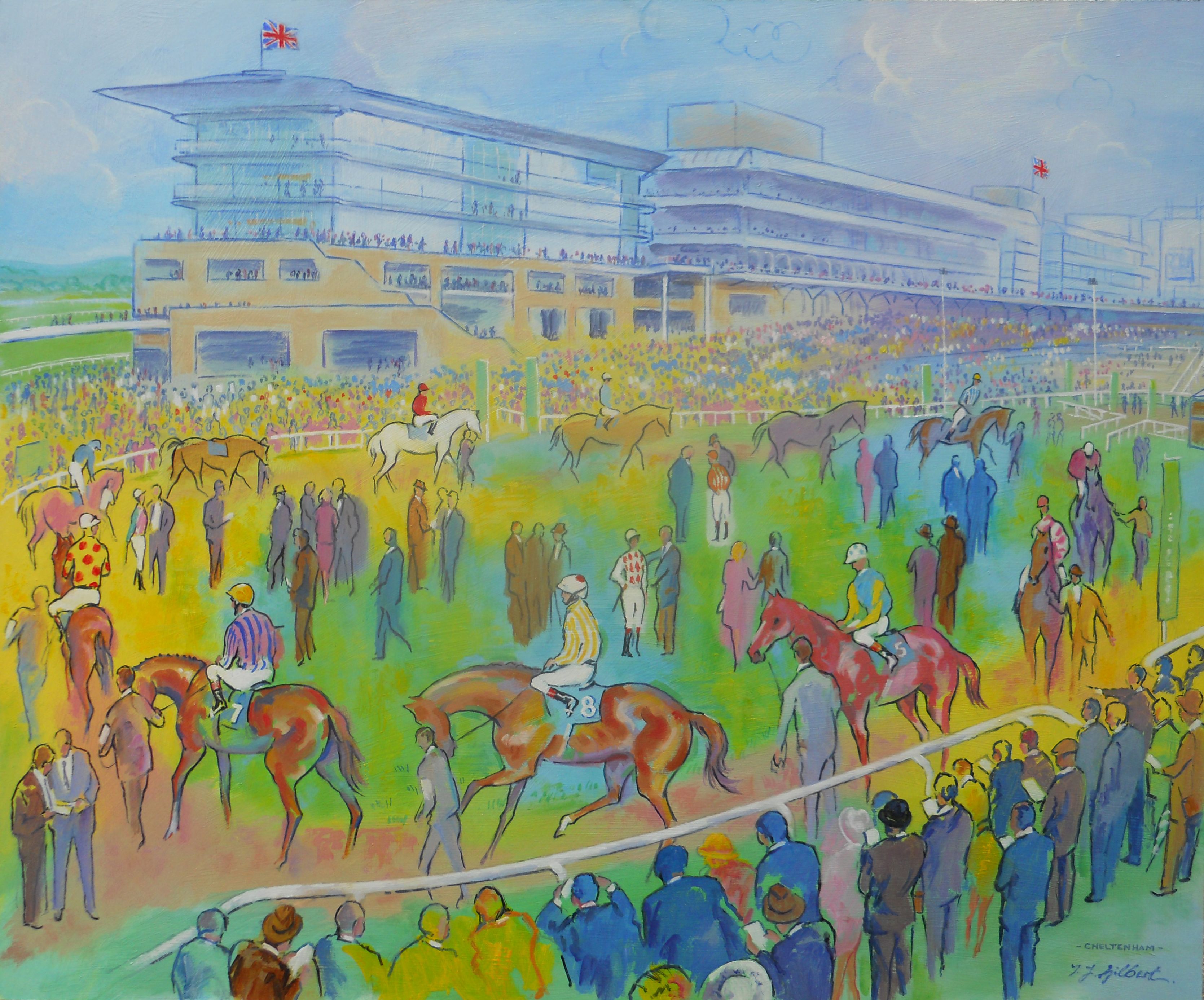
“With a knife I can scrape in because it’s hard, then add colour, but on canvas you can’t, as it gives too much. I’ve got more impressionistic with some of my work in recent years and the colours are very high key. My latest is of the paddock at Ascot, which is proving a very popular print.”
The commercial background has still not left his heart.
“I work mostly on a 20 x 24 inch ratio, but because of my commercial background, I never really have a strong preference to do what I want to do, it’s always whatever the client wants.
“I get bored with things quite quickly, so after I’ve done a few of the racecard montages, then I want to change and do something else.”
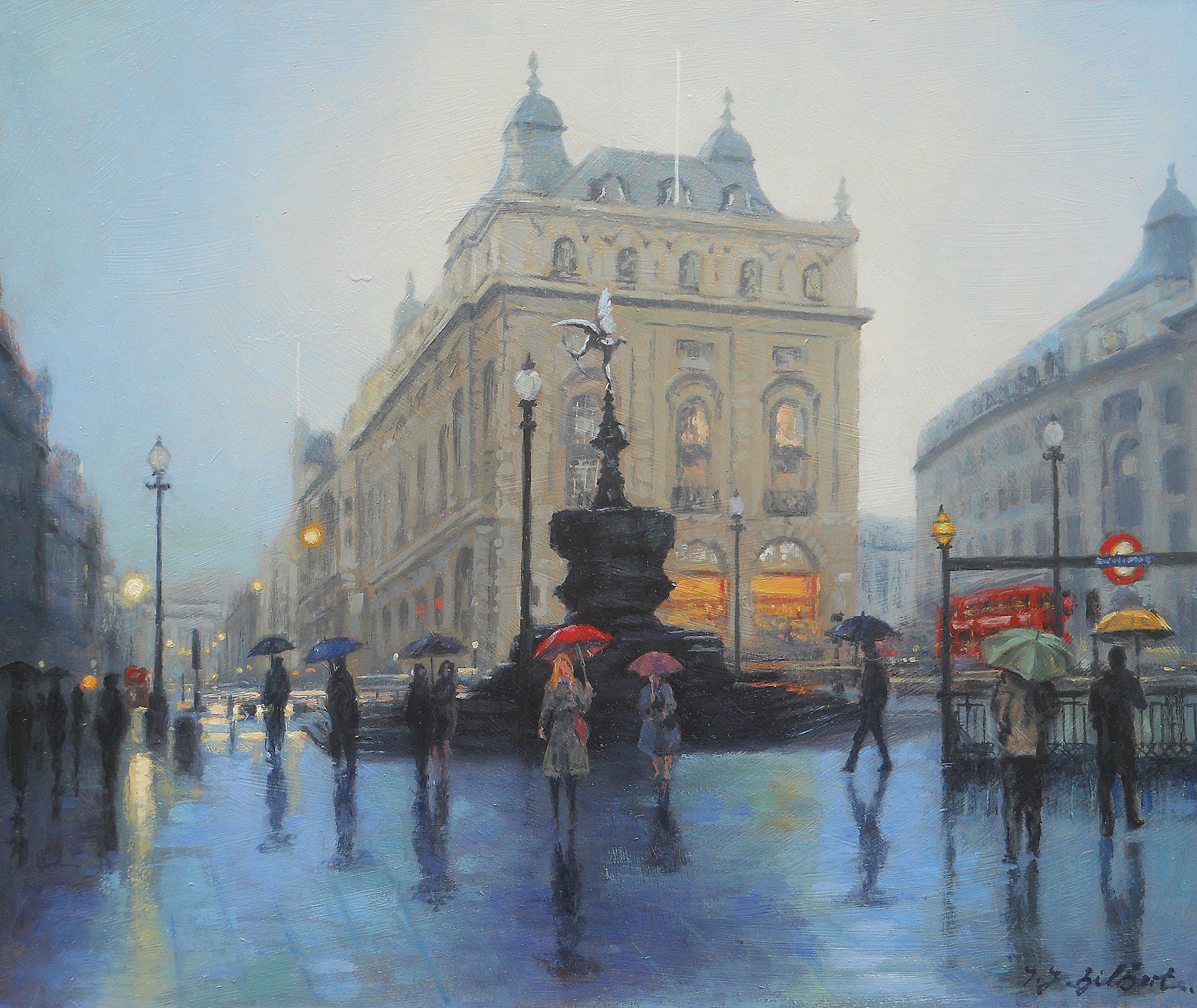
The “something else” also extends to London cityscapes, including haunts from his youth such as the Old Vic and Westminster Bridge, scenes from the ballet, where he has sat and sketched in the audience, and his love of Jazz at Ronnie Scott’s.
His sporting interests are not just confined to racing, and he has had commissions to paint England Rugby fly-half Johnny Wilkinson, Manchester United’s David Beckham, Ryan Giggs and Ole Gunnar Solskjær and once, at very short notice, the Tyson Bruno fight. Then he took his reference off the television and dried the finished piece with a hair dryer!
He also attends the Henley Regatta every year producing a collection of cartoon characters, usually a sell out.
Retuning to equestrianism, he observes: “I do like to do the whole horse in a landscape. I painted Generous at Paul Cole’s and Nashwan for Sheikh Hamdan at East Ilsley.
“These days I find traditional types of painting a bit flat, and there are so many people producing them, you try to do something different, I don’t want it to look like a photograph. A painting allows you to add information that might not be easily seen in a photograph, which then adds narrative.”
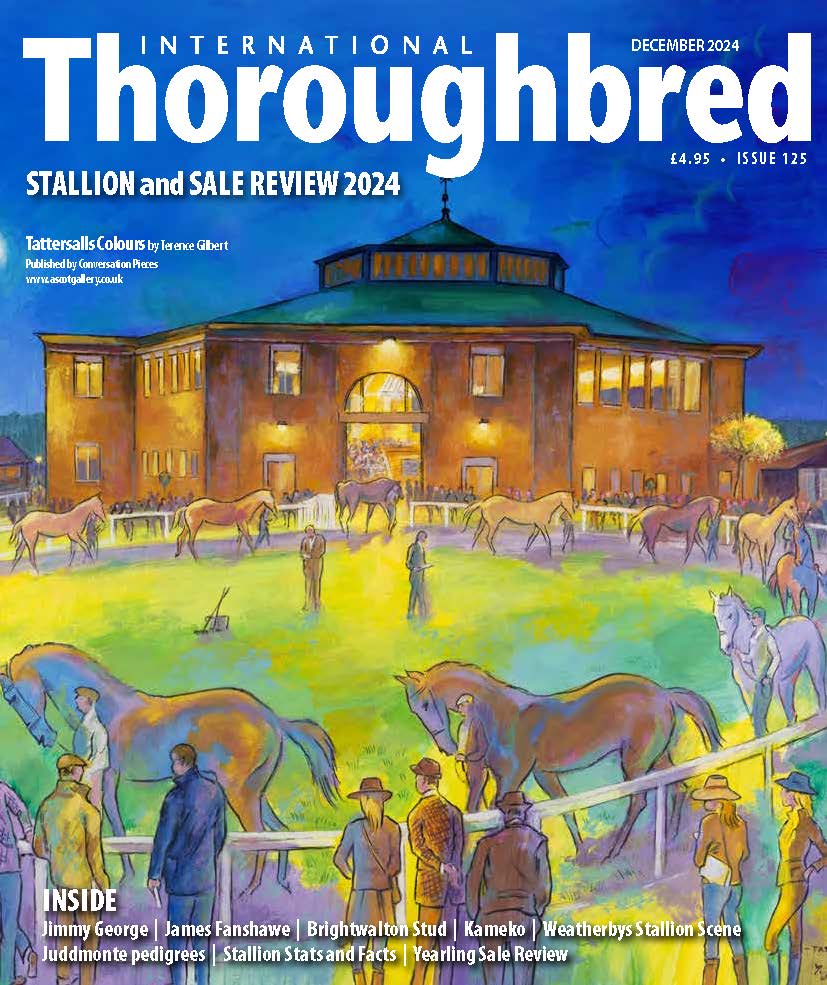
Even today, after a lifetime of work, his style is still altering and developing, and was the basis for the Tattersalls parade ring picture used on this magazine’s December 2024 front cover.
“I’ve moved to this impressionistic style, reminiscent of Raoul Dufy, but my own interpretation,” he explains.
“I’ve done about 30 of those larger pictures of paddock and racecourse scenes at York, Cheltenham and Ascot.
“From a commercial aspect those horses on the racecards, they’re very easy to personalise, whether you’re an owner, a trainer or a punter that won big – the racecard adds a bit of authority to the piece, it’s a record of the day.
“I like to add little jots on there about the trainer and so on, so it feels like it’s been painted on the spot.”
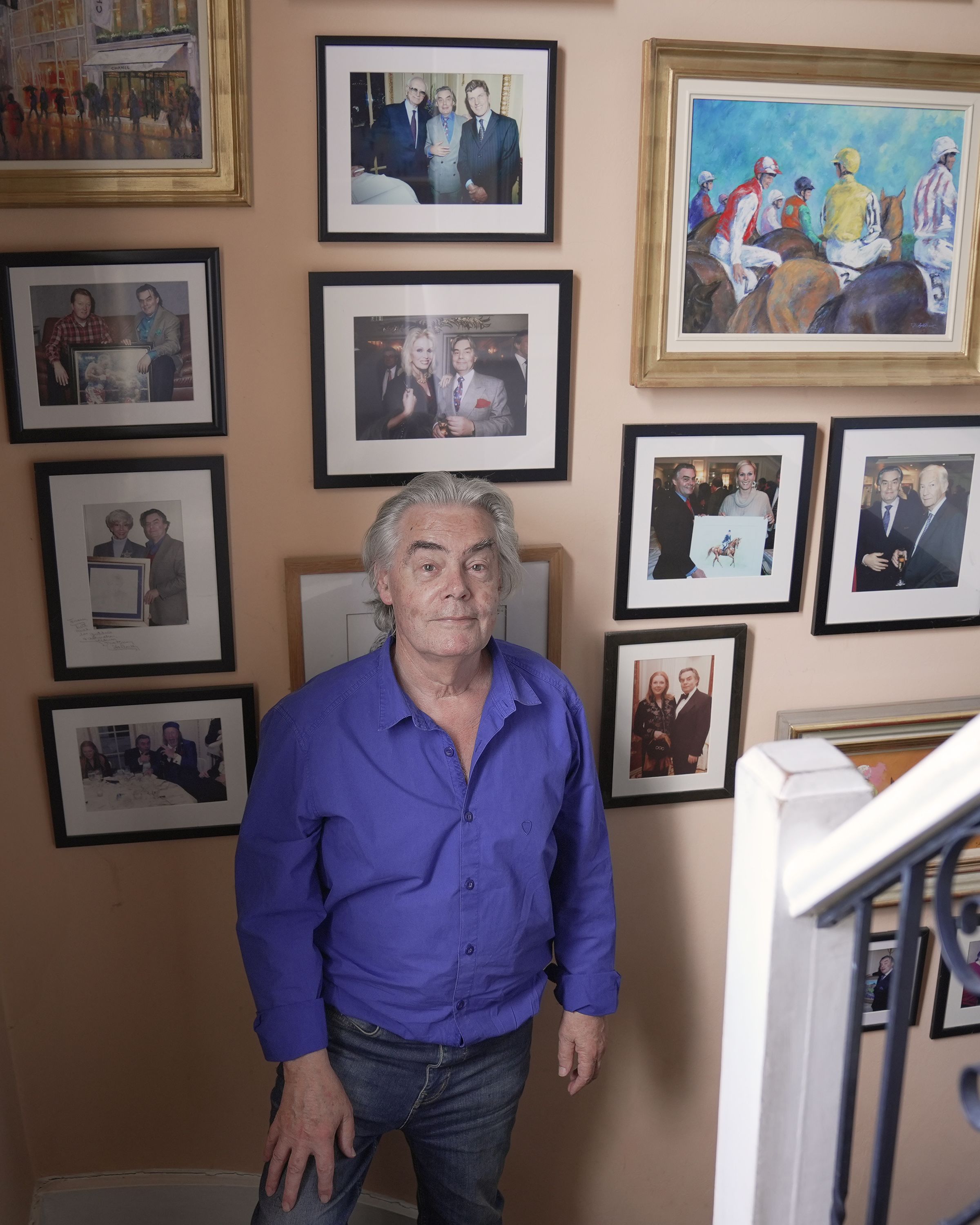
Gilbert’s studio is crammed with old exhibition catalogues and work at various stages of completion, though he does admit to one very interesting fact.
“I used to be an Elvis impersonator! I used to go to auditions with my guitar, I called myself ‘Chad Martin’ and they used to say, ‘Chad – can we call you Terry? Tell me, how are the paintings doing?’
“They knew I painted as well and they were obviously telling me I should l keep on with that instead!”
It was a decision that has served him well, as he concludes, “I know artists specialise in one subject and they get known for that, but on the other hand because I’m so diverse, I’m never out of work!”


 Built with Shorthand