
Criss Cross
Ciaran Doran gives us views on some of the leading nicks in Europe (see tables in the pdf)
WITH EACH passing day, week, month, and year, it seems the stranglehold of technology on the modern world grows ever tighter. The world of sport is no different, with the advent of video technology serving to rile certain cohorts of long-standing fans, and, of course, technology in sports is making an onward march of analytics.
What exactly constitutes analytics is a somewhat contentious topic, but it is likely fair to say that statistics in some form are used to evaluate sporting performance in some way.
Bloodstock analysis may have fewer moving parts than other sports, but that does not mean that there is little in the way of meaningful data points.
One of the most common metrics is, of course, to look at the number of stakes winners and performers sired by a certain stallion. Delving further, can we break this down in order to glean more insight?
The success rate of different nicks is likely to be a significant factor in the decision-making of breeders when it comes to establishing just which stallion should cover their mare.
And understandably, a breeder would rather first have evidence that the sire-line of their own mare works well with a stallion within their budget.
Whilst not all sires listed could be considered bargains at their respective fees, they do give us an indication as to which crosses have been the most successful over time.
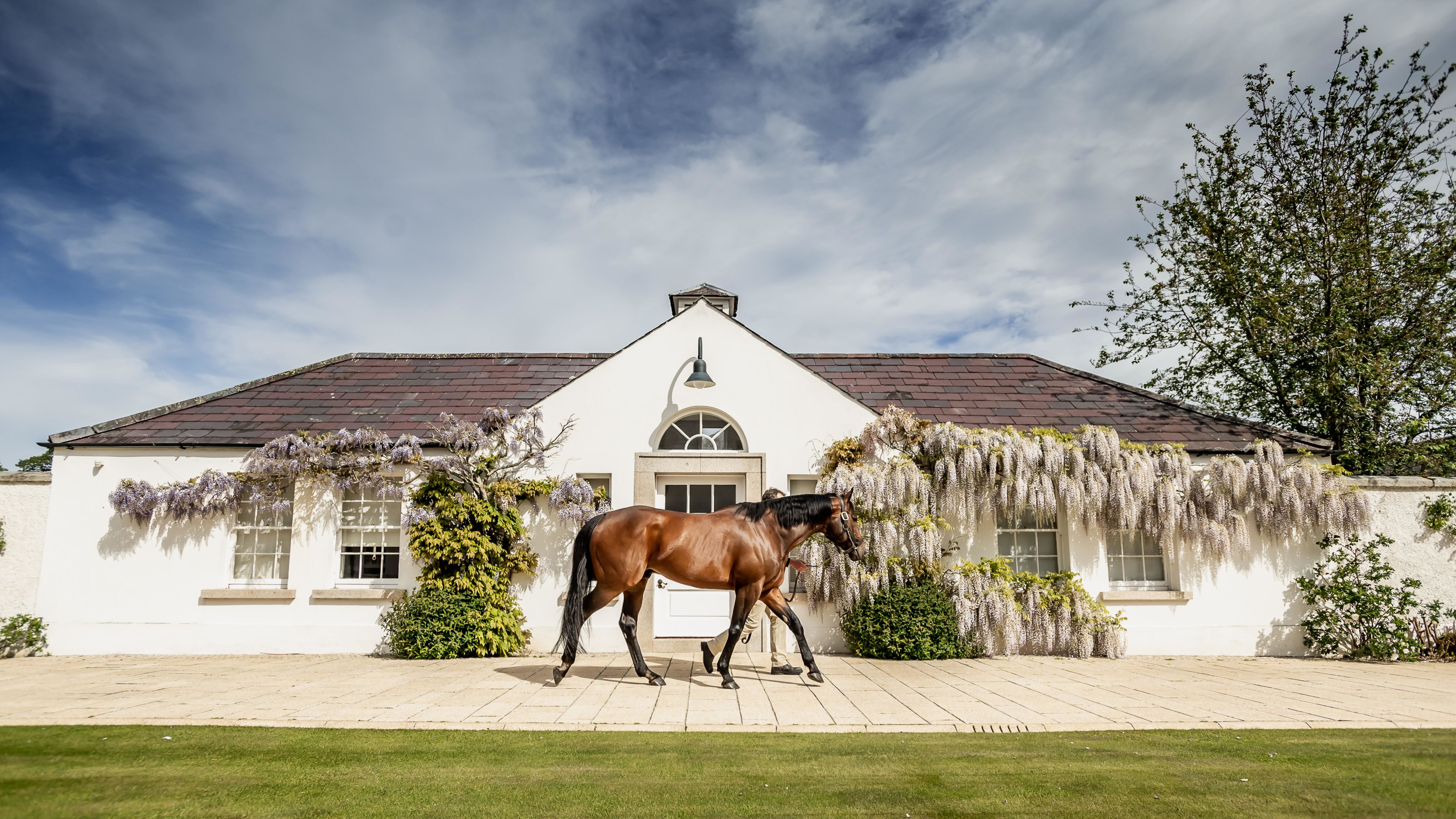
Sea The Stars and Kingmambo
Arguably the best colt on the racecourse this side of Frankel has been Baaeed and he, along with his full-brother Hukum, are themselves both products of the most successful nick with 20 or more runners in the dataset, with 36 per cent of runners bred on the Sea The Stars x Kingmambo cross claiming the spoils in a stakes race.
Dubawi over Street Cry is another wildly successful nick, with one-third of all runners winning a stakes race, and includes the two-time Breeders’ Cup Turf champion and 17-time stakes winner Rebel’s Romance.
Frankel and Dansili follows just behind, with two of the last three Oaks winners in Minnie Hauk and Soul Sister hailing from this cross, while 31 per cent of the progeny by Dubawi crossed with Monsun mares such as Yibir and Wild Illusion have won some form of black-type race.
Are we able to explain why the above nicks out-perform all others?
Most of the stallions listed have been amongst Europe’s elite for the last five-to-ten years so logically we would also expect them to perform better than anyone else when it comes to nicks.
In addition, elite sires tend to benefit from elite books and elite books will often be replete with mares both from deep families and by some of the best stallions of yesteryear.
Successful nicks can though also be a function of a sire’s affinity with a damsire or even the sire-line of a dam.
How can we best examine this?
Let us start by looking at the best stallions when it comes to covering daughters, grand-daughters, and great-grand-daughters of Galileo, himself the most iconic sire of the last quarter-century.
Unsurprisingly, Dubawi is top of the charts here, driven by top-level winners such as Night Of Thunder, Ghaiyyath, and Henry Longfellow.
However, the symbiotic relationship between the two extends further; the likes of Modern Games, Coroebus, Lead Artist, and Ezeliya speak to how the affinity between Dubawi and Galileo extends to some of Galileo’s stand-out sons and grandsons at stud.
The next three entries are somewhat of a surprise although Harry Angel, Camelot, and Muhaarar have not covered that many Galileo-line mares. Lope De Vega on the other hand has covered a huge number of such mares; Shadow Of Light and recent Mill Reef Stakes (G2) winner Words Of Truth represent two of 24 black-type winners bred on the Lope De Vega and Galileo-line mare cross.
So far, we have looked at the interaction between a given number of stallions and dams with a generally stamina-laden sire-line.
Let’s look at some speed
Let’s flip the script by looking at how stallions fare when paired with mares from speedier sire-lines.
Given he was born some four years after Galileo, Dubawi doesn’t quite have the same number of maternal grandchildren on the track as his one-time Coolmore rival.
The Frankel and Dubawi nick, in and of itself a derivative of the Dubawi x Galileo out-cross in reverse, performs particularly well; over 25 per cent of runners bred on this cross have won a stakes races and include the likes of Adayar, Mostahdaf, and Homeless Songs. Teofilo and Siyouni also perform quite well; for example, 2023 Melbourne Cup winner Without A Fight was bred on the Teofilo x Dubawi cross.
Perhaps the most famous nick in recent memory was Galileo x Danehill, a cross which blended speed with stamina and marked the intersection of two champion sires.
In the table on page 81, we can see just how Danehill-line mares have fared when crossed with various stallions.
Dubawi again comes home in first position, helped by the likes of Master Of The Seas, Time Test, and Naval Crown. The affinity between Dubawi and Danehill-line mares extends beyond just Darley’s 23-year-old champion sire;
his sons fill up second, third, and fourth, with Frankel (Himself out of a Danehill mare) next best.
The 2024 Prince of Wales’s Stakes (G1) second-placed Zarakem is perhaps Zarak’s most distinguished son out of
a Danehill-line mare, while 2024 William Hill Futurity winner Hotazhell is the most notable runner to emerge from a Too Darn Hot and Danehill-line mare pairing.
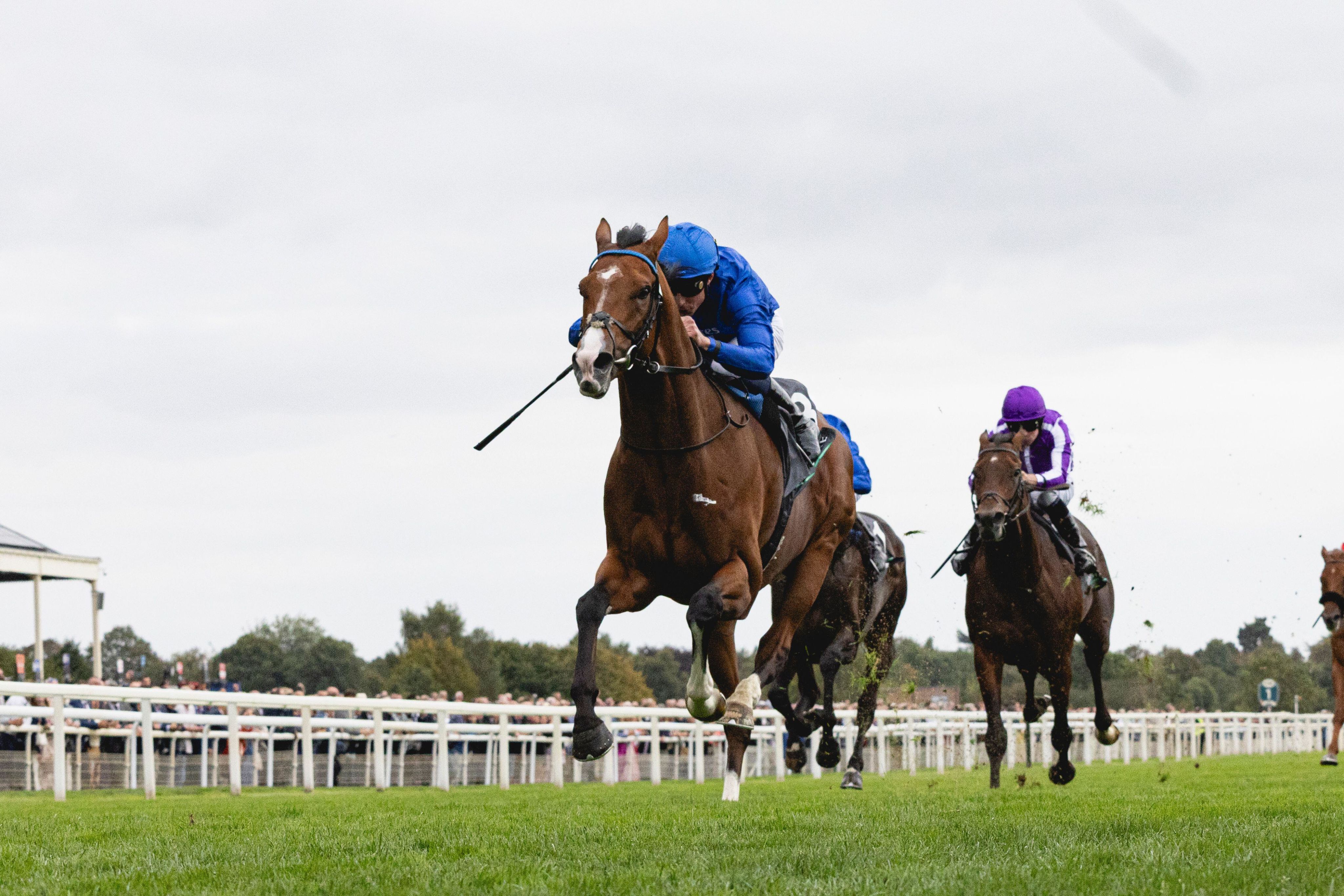
These nicks have been usurped however by Night Of Thunder, who has sired Ombudsman out of a Dansili mare and Highfield Princess out of a Danehill mare.
Galileo with Danehill and its offshoots are in the purest sense a marriage of speed and stamina. However, you can have speed in a pedigree and yet not be related to Danehill.
Green Desert influence
Let’s take a look at another son of Danzig, Green Desert.
The aforementioned Frankel x Dansili cross has supplied us with two out of the last three Oaks winners and it is no surprise, aside from inbreeding concerns, that Frankel has performed so well when allied with Danehill-lines mares.
Of course, Frankel and Danehill is itself a derivative of Galileo and Danehill as is Gleneagles x Danehill and Australia x Danehill
And their extensions have yielded the likes of Ambiente Friendly, One Look, Order of Australia, Sir Ron Priestley, and Galileo Chrome.
There is movement at the top, with Kingman displacing Dubawi as the best nick with Green Desert-line mares; this again raises questions as to inbreeding given Kingman is himself a paternal grand-son of Green Desert.
As for Dubawi, his 2,000 Guineas winners Makfi and Notable Speech, as well as Eldar Eldarov and Al Husn, are the most famous exponents of the Dubawi and Green Desert-line mare cross.
Zarak comes third ahead of Frankel, who can count on the likes of Onesto and El Cordobes, themselves both out of Sea The Stars mares.
Never So Brave represents the No Nay Never and Green Desert-line mare nick while Almaqam, Program Trading, and Lucky Vega are sons of Lope De Vega whose dams can trace their lineage back to Green Desert.
Acclamation-line speed
That said, speed is not exclusively confined to Danehill and Green Desert-line mares; next, let’s take a look at Acclamation-line mares and how they perform when matched with different stallions.
The sample size here is relatively small compared to some of the tables; regardless, we can still attempt to glean some insight from the above.
Thanks to the likes of Broome, Point Lonsdale, and Cercene, Australia has an excellent record when covering Acclamation-line mares. Frankel is next best based on black-type winners to runners (and is in fact number one when it comes to black-type horses to runners), with progeny such as Diego Velazquez and Bedtime Story making their presence felt in stakes races.
Pivotal and Polar Falcon
Another reliable source of speed was Pivotal; indeed, he is the damsire of Cracksman, Magical, Rhododendron, Nashwa, Love, Hydrangea, Hermosa, Camille Pissarro, Golden Horde, and Henri Matisse.
In an attempt to increase the sample size, we will look at his sire, Polar Falcon and how different sires fare when crossed with mares from his sire-line.
Dubawi returns to the top thanks to the likes of Erevann, himself out of a Siyouni mare.
Siyouni is also the damsire of both Zeus Olympios and Fairy Godmother, who are two of Night Of Thunder’s four stakes winners out of Polar Falcon-line mares.
Over 13 per cent of all Gleneagles runners out of Polar Falcon-line mares have won a black-type race, including Galen and Royal Scotsman, while Torok (perhaps surprisingly) comes in next.
There are some recurring themes across our results so far; in pretty much all for instance, Dubawi is vying for the number one spot. The fact that Dubawi performs well with mares from different sire-lines does not point to him nicking particularly well with certain mares but rather suggests (as should be fairly obvious) that he has been one of Europe’s best sires for the last 15 years.
If we really are to isolate nicks that are particularly effective, we would be best advised to focus on crosses whereby the sire performs noticeably better than he does in general.
Of course, there are some confounding variables at play; sires may post their best results with Danehill-line mares but Danehill, Danehill Dancer, and Dansili were some of the best sires about and consequently covered some of the best books in the game.
In this case, to what extent is the quality of the female family driving the result rather than the affinity between the sire and damsire?
Only if one were able to control both for the sire’s general ability and the quality of the dam could one firmly establish “true nicks” i.e. crosses whereby the strengths and weaknesses of the sire and damsire are compensated by each other to such an extent that any foal to emerge from such a cross is endowed with a surfeit of positive attributes necessary for success at the top level of racing.
Such analysis is beyond the scope of this piece, but that does not mean that we should discard what we have learned.
Undoubtedly, certain crosses have stood the test of time and shall continue to inspire mating plans in the near-term at the very least.
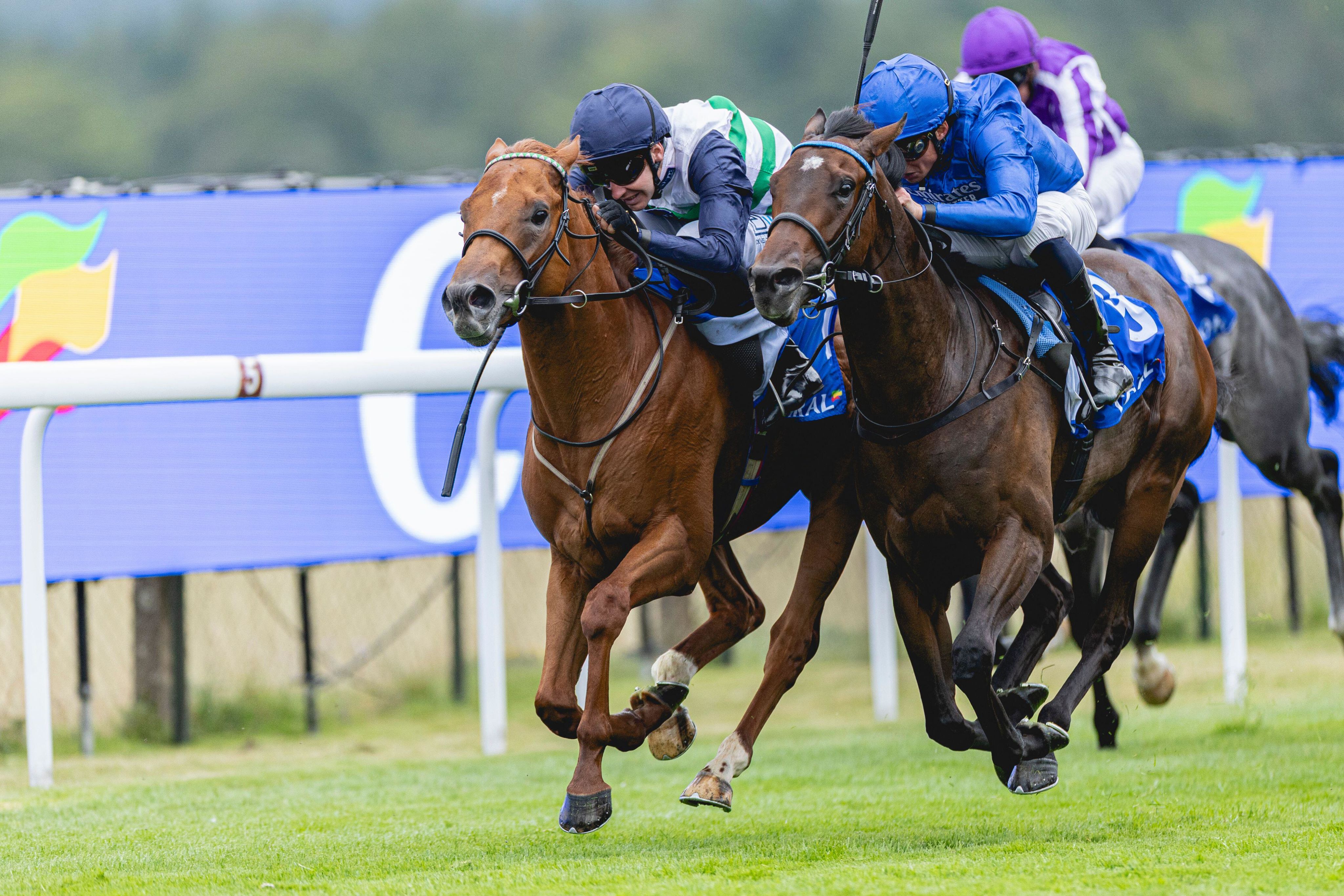
Admittedly, crosses cannot survive indefinitely but just because a certain cross cannot go on forever does not entail that its extensions will have a finite lifespan; Zavateri’s breeding speaks to this given Without Parole x Siyouni is itself a derivative of Galileo x Pivotal.
What remains pretty much unquestionable is that if breeders find success with a cross, they will they try to replicate extensions of said cross if they cannot replicate the cross itself.
Just like the sire, Galileo x Danehill may have some staying power yet.

Sea The Stars
Sea The Stars

Ombudsman
Ombudsman
Zavateri
Zavateri
 Built with Shorthand